
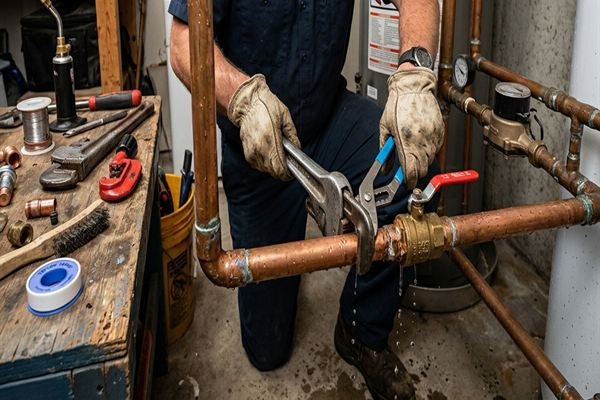
Understanding Sub-Slab Copper Corrosion in Washington
Throughout Washington State, tens of thousands of homes built between 1960 and 2005 rely on copper water supply lines encased directly in gravel beneath concrete foundation slabs. While copper is known for durability, chemical and mechanical factors frequently cause microscopic "pinholes" to penetrate the pipe wall after 15 to 20 years of service.
Unlike a catastrophic pipe rupture that floods a home in minutes, pinhole leaks often spray a fine, continuous mist under 60 PSI into the gravel bed beneath your slab. This slow, silent leak erodes supporting earth, saturates foundation footings, and drives up water bills for months before moisture breaches interior flooring.
Why Copper Develops Pinhole Leaks in Washington
- Pitting Corrosion from Municipal Water: In many Pacific Northwest municipalities, water chemistry with low pH or unbalanced dissolved solids attacks the protective copper oxide patina inside the pipe, creating microscopic pit cavities that eventually puncture outward.
- Soil Electrolysis & Unshielded Contact: When bare copper is laid against moist soil, crushed basalt gravel, or concrete without plastic sleeving, galvanic currents develop between dissimilar minerals, eating through the outer wall of the copper pipe.
- High Velocity Scouring: Homes with water pressure over 70 PSI or undersized 1/2-inch copper loops suffer from hydraulic turbulence that physically wears away the softer copper metal at 90-degree elbows beneath the slab.
Our Repair Methodologies for Copper Lines
- Localized Surgical Silver Brazing: If the copper line is structurally sound and suffered localized damage, we braze a heavy-gauge Type K copper sleeve using 15% silver-bearing alloy rated for underground potable applications.
- Whole-Run PEX-a Attic Reroute: When corrosion is systemic (multiple pinholes along the run), a spot repair only buys time before the next leak. An overhead Uponor PEX-a reroute permanently abandons the buried line, giving you lifetime peace of mind.
Did You Know?
A single 1/16th-inch pinhole leak in a subterranean copper line wastes over 800 gallons of clean water per day, adding hundreds of dollars to your quarterly utility bill while endangering your foundation.
Frequently Asked Questions
Our 10 Specialized Plumbing Services Available in Washington State
Every foundation leak requires precision engineering. Explore our complete suite of non-invasive diagnostics and permanent repair solutions with 24/7 Washington emergency dispatch:
Patching an aged copper line under concrete requires jackhammering your floor and replacing flooring every time. Once a copper line develops its first pinhole from pitting corrosion, the remaining pipe wall is equally thin. Multiple spot repairs quickly cost far more than a clean, permanent overhead PEX reroute.